02 · Restaurant profitability intelligence
PlateProfitAI
Connecting recipe costs, menu prices and sales context so hospitality operators can see what deserves attention.
How can disconnected menu data become a clear, explainable business decision?
- Company context
- Founder, Point Zero AI
- My role
- Product direction, profitability workflows, validation and implementation review
- Current status
- v1.0.0-rc2 · Release candidate
- Development approach
- AI-supported implementation under founder-directed requirements, testing and validation.
01 · Problem
The problem at the centre
Recipe costs, ingredient prices, menu prices and weekly sales are often held in separate tools or spreadsheets. That makes it difficult for a chef or owner to see where margin is protected, where it is leaking and what to review first.
How can disconnected menu data become a clear, explainable business decision?
Chefs, restaurant owners and hospitality operators who need practical menu-profitability decisions without sending business data to a cloud service.
PlateProfitAI combines costing, price history, sales context and menu structure in a local Windows application. It turns those inputs into explainable dashboards, scenarios and prioritised reviews while keeping the user in control of every pricing decision.
Local-first Windows application with no account and no restaurant-data upload.
02 · Product Direction
A product boundary before a feature list
PlateProfitAI combines costing, price history, sales context and menu structure in a local Windows application. It turns those inputs into explainable dashboards, scenarios and prioritised reviews while keeping the user in control of every pricing decision.
Recipe costing
Yield-aware recipe costs, unit conversion, cost per serve, food-cost percentage and suggested pricing.
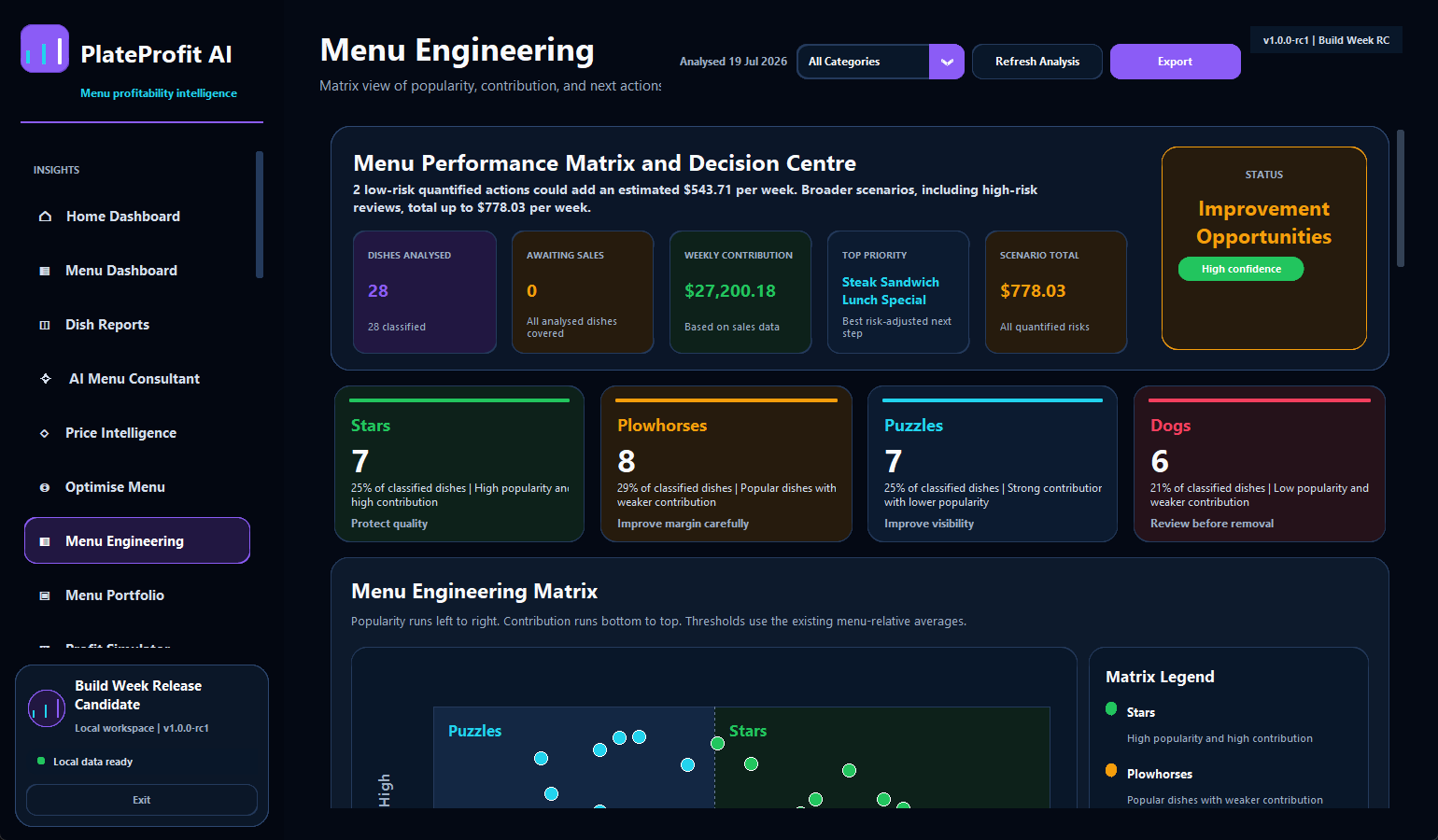
Menu engineering
Classifies menu performance using popularity and contribution, with confidence and ranked actions.
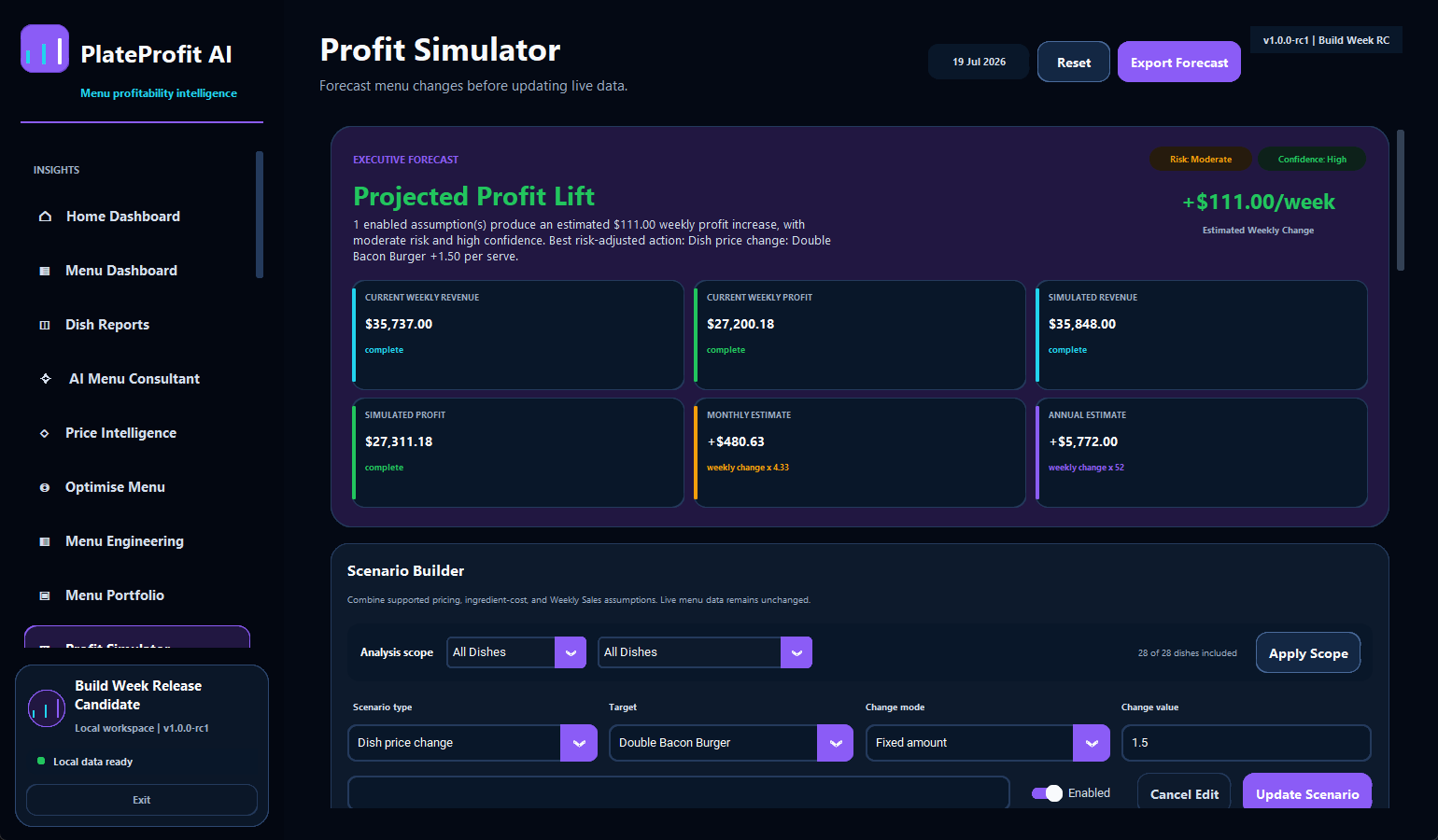
Profit simulation
Models price, ingredient-cost and weekly-sales scenarios without changing live records.
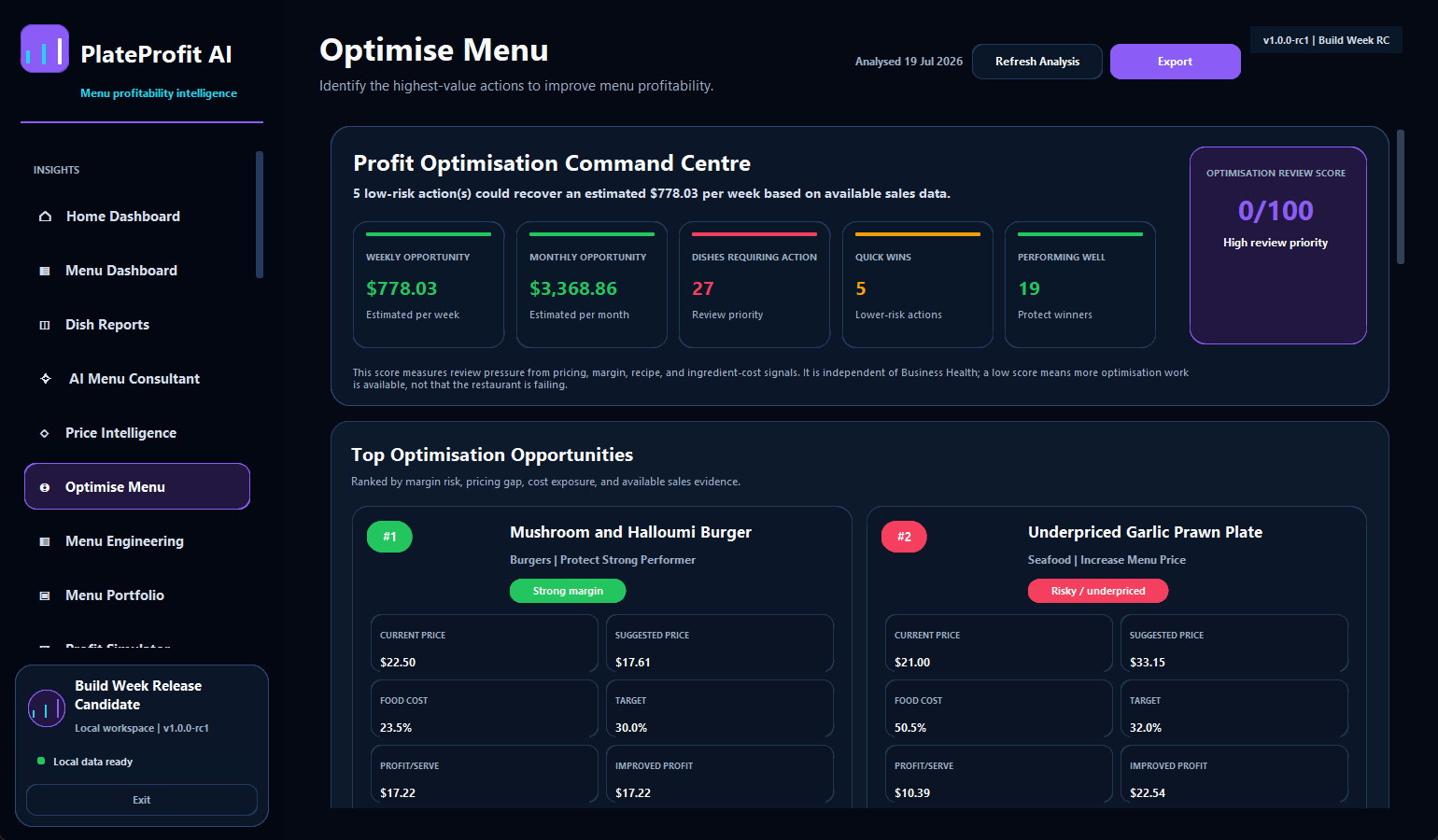
Price intelligence
Links recorded ingredient movements to affected dishes, trends and review priorities.
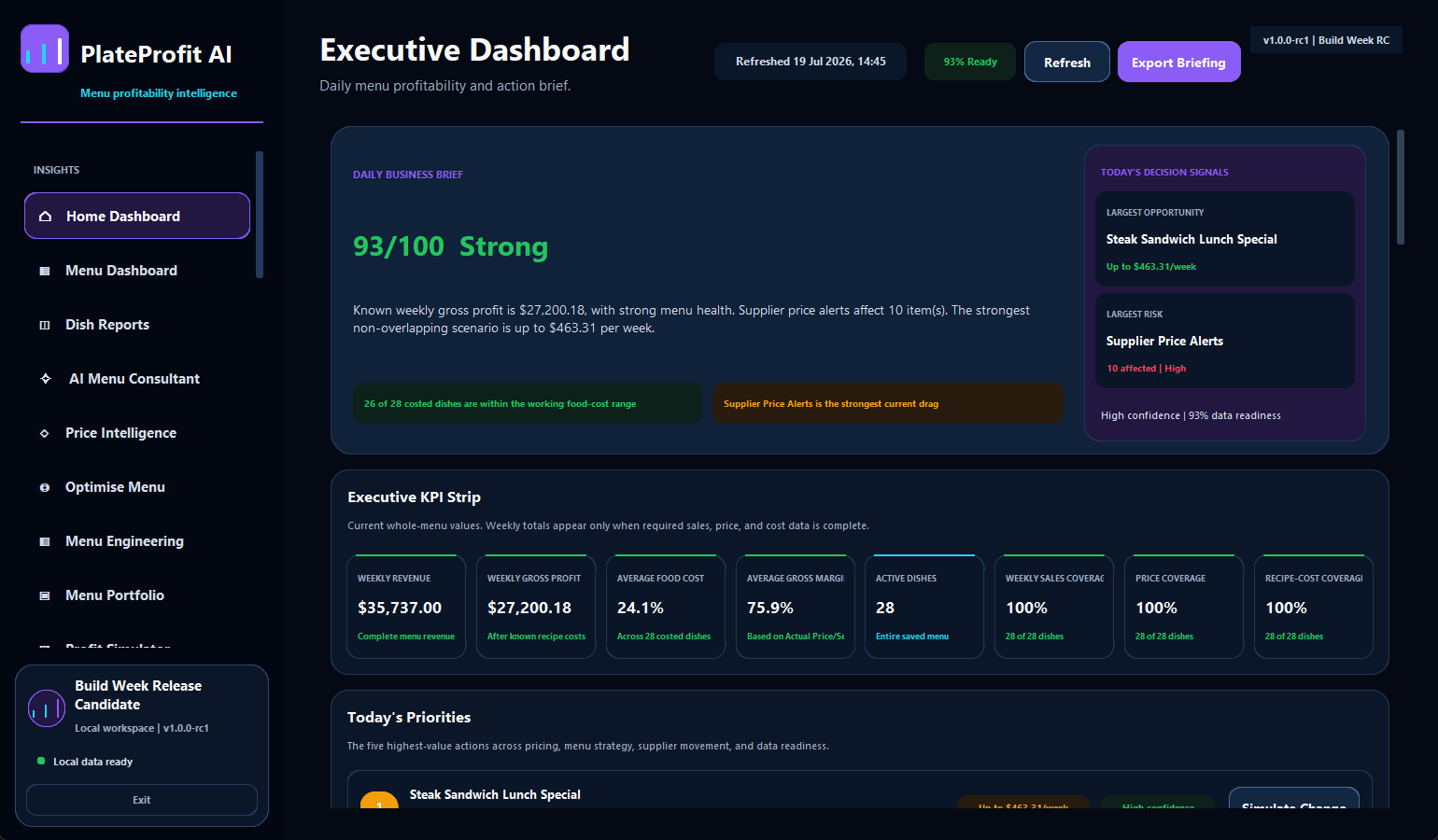
Executive decision brief
Surfaces business health, risks, opportunities and next actions from available local data.
Portable delivery
Packages as a Windows executable with local backup, restore and export workflows.
03 · Process and Contribution
How I directed the work
- 01
Framed the product around the operator’s profitability problem rather than an exhaustive accounting system.
- 02
Defined the data model and workflows for ingredients, recipes, menus, price history and scenarios.
- 03
Directed a modular desktop interface with reusable pages, navigation and shared components.
- 04
Directed and reviewed implementation of deterministic recommendation logic that keeps calculations and assumptions visible.
- 05
Developed a fictional showcase dataset, validated release packages and prepared a repeatable product demonstration.
I translated the hospitality problem into ingredient, recipe, menu, pricing and scenario requirements, then used AI-assisted development to implement and refine the workflows. I reviewed the calculations, interface states and release output against those requirements.
Feedback connected to a hospitality target user shaped the recipe, ingredient and menu workflows. The 625-test suite and fictional showcase dataset validate the costing and profitability logic without claiming commercial customer use.
Sustained iteration expanded the product from recipe costing into menu engineering, profit simulation, price intelligence and a clearer executive decision brief while keeping the underlying logic explainable.
04 · Testing and Validation
What supports the current status
Verified from the current local build and test suite.
automated tests passed
Executed locally for this portfolio audit.
packaged release
Windows judge and source archives passed the project audit.
showcase dishes
Fictional deterministic demo data with complete core coverage.
A packaged local-first release candidate with a public RC2 release, audited archives and a fully passing 625-test suite. Competition submission complete; outcome pending.
05 · Product views
The product, in context.
These screens use the project’s fictional showcase data and contain no private restaurant information.
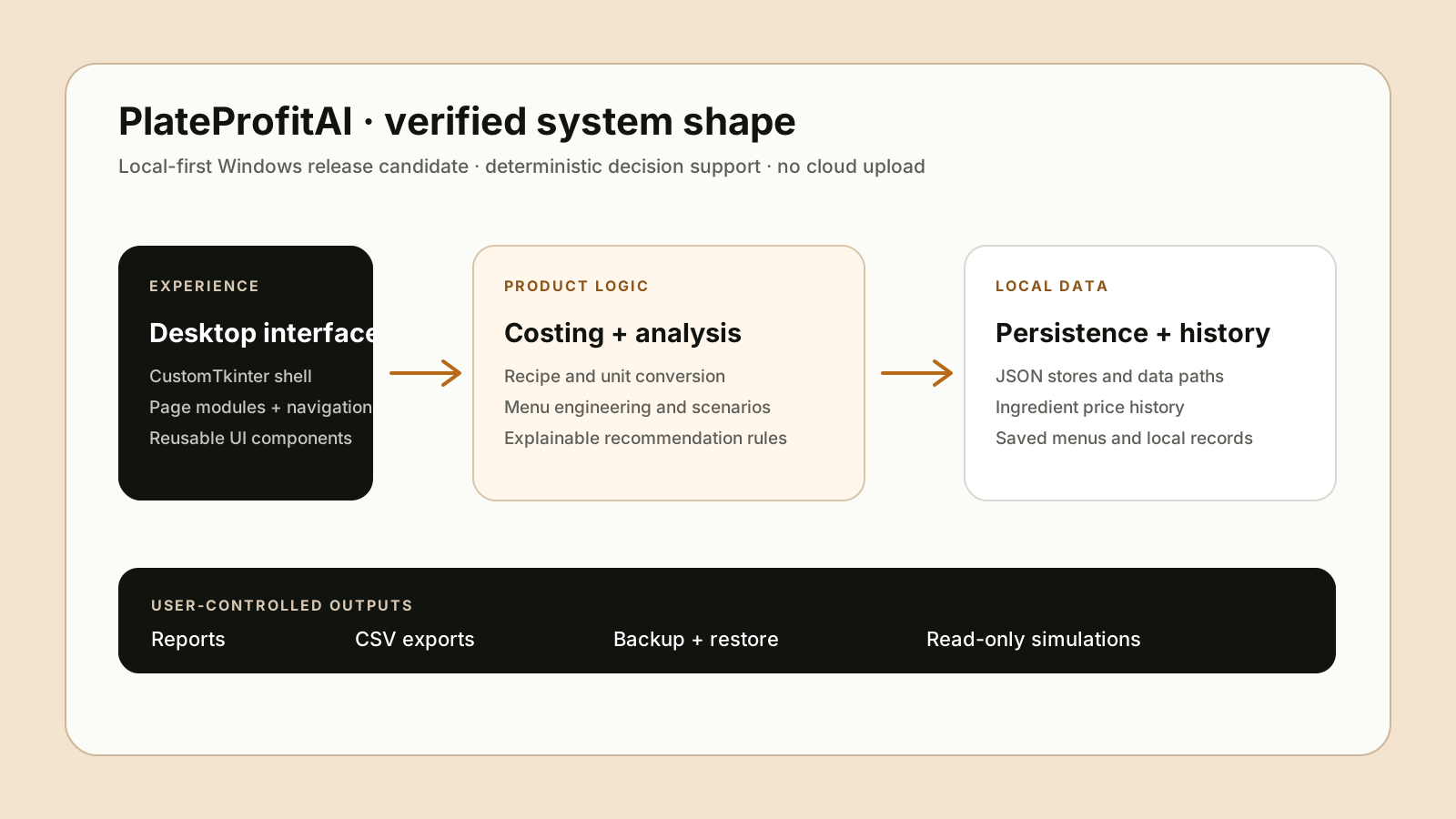
06 · System
How the system supports the experience
Simplified from current source structure and architecture records. Sensitive implementation detail is intentionally excluded.
07 · Key Decisions
Boundaries that shaped the product
- Local-first Windows application with no account and no restaurant-data upload.
- Manual data entry; no POS, supplier API or automatic invoice-scanning integration.
- Recommendations are explainable estimates for review, not autonomous pricing decisions.
- The release candidate is unsigned and may trigger SmartScreen.
08 · Lessons Learned
What I will carry forward
Unknown data should stay unknown. Replacing missing evidence with zero creates confident but misleading business advice.
Risk, confidence and priority are different product concepts and need different visual and decision treatment.
A showcase dataset is part of product delivery: it makes the value legible without exposing a real restaurant’s information.
Technology
Tools used in the build
Technologies used in the current implementation.
View public repository